
16 May Why Every School Needs a Structured Sports Programme – Not Just PE
Posted at 18:01h
in Strategy



There’s a common misconception in Indian education: that having a PE period on the timetable means a school has a sports programme. It doesn’t.
Physical education and structured sports programming are fundamentally different in outcome, intent, and institutional value. PE, in most Indian schools, is an unstructured free period where students are given a ball and told to play. There’s no curriculum. No progression. No assessment. No accountability.
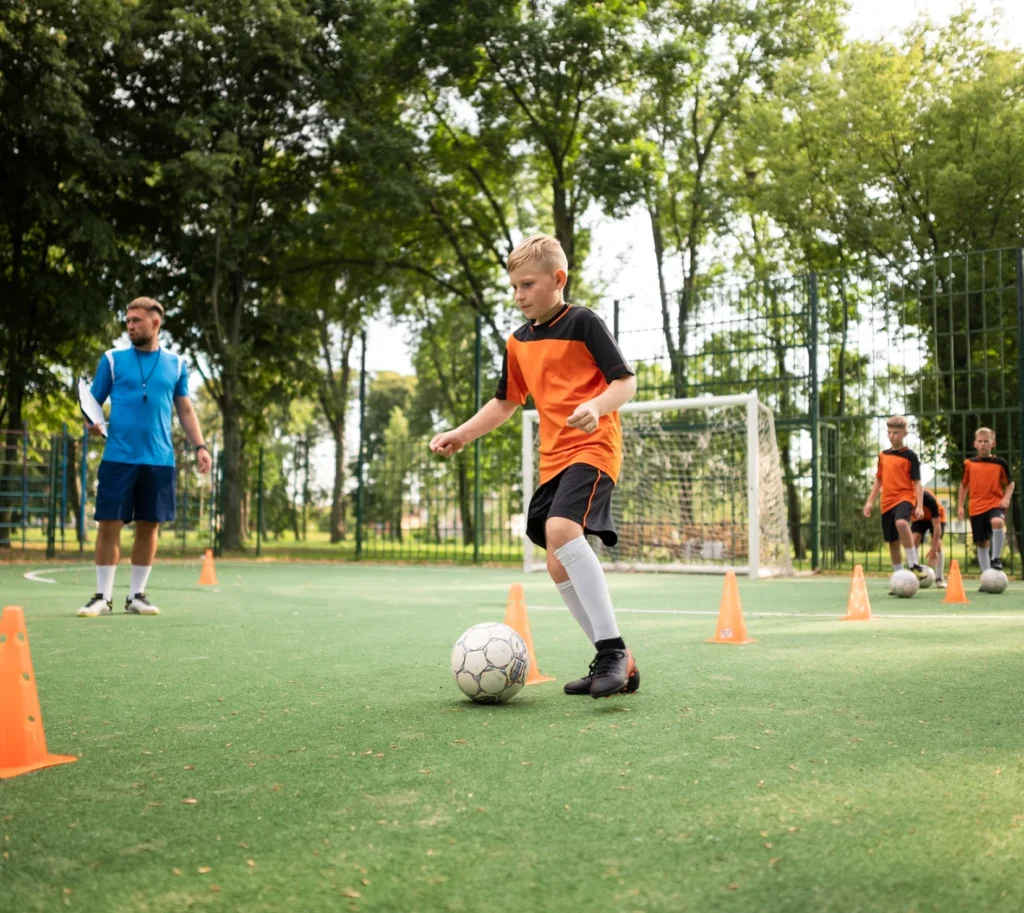
A structured sports programme is something else entirely. It has a designed curriculum that progresses across age groups. It has trained, certified coaches who follow session plans. It has governance frameworks that ensure quality and safety. It integrates with the school’s academic calendar. And it produces measurable outcomes – in fitness, skill development, teamwork, and student wellbeing.
The distinction matters because the benefits of sport in education are real and well-documented: improved physical health, better concentration, stronger social skills, reduced behavioural issues, and higher overall student satisfaction. But these benefits only materialise when sport is delivered with structure and intent – not when it’s treated as a gap-filler in the timetable.
Schools that invest in structured sports programming see the difference immediately. Students are more engaged. Parents notice the change. Teachers report better behaviour and focus in academic classes. And the school’s reputation for holistic education grows.
The cost of a structured programme is marginally higher than ad-hoc coaching. The return – in student outcomes, parent satisfaction, and institutional reputation – is incomparably greater.
Every school in India has PE on the timetable. Very few have a genuine sports programme. The ones that make the shift are the ones that stand apart.